Student Interview Project

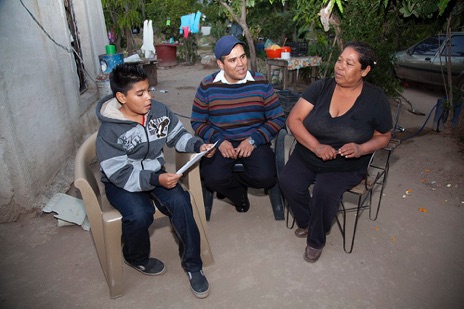
With the help of Board Member and Álamos teacher Trini Rangel, the Álamos History Association is gathering information for its archives through family interviews.
With a list of questions prepared by the Association, students interview older family members, asking them about life in Álamos and Sonora during their youth. The results have been surprising for both History Association members and students.
ABOVE: Rosa Idalia Tovar (right) is interviewed by her grandson, Zaquiel Adán Zamorano as Profesor Rangel directs the conversation. The interviews are made in the evenings after the school days ends.
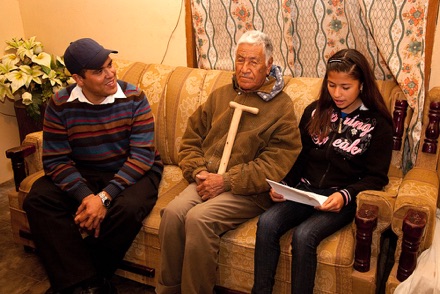
ABOVE: Porfirio Jatomea Villegas (age 73, center) is interviewed by his grand-daughter, Yadira del Carmen Zamorano Gil.
In an age of cell phones, television, and the internet, the students have learned about life before the modern conveniences of today. Jatomea Villegas, who is 73, talked about living without electricity or running water, where there were no cars in the small town outside of Álamos where he was raised. To contact other family members, people wrote letters and paid others to have them delivered—since there was no
rural home delivery through regular postal services. Older family members discussed the foods they ate and how they were prepared before refrigerators and modern stoves, and they described the feast days and religious festivals they celebrated.
Each interview is videotaped and filed in the Association research library, and students write written reports as well—which are also filed in the library.
The project began in 2012 and will continue indefinitely, providing a valuable resource of family history information for genealogy research.
Questions which students ask their family members
1. Cuál es tu nombre complete? (What is your full name?)
2. Cuál es tu edad? (What is your age?)
3. Naciste Aquí o donde? (Were you born in Álamos or somewhere else?)
4. Cuál es tu fecha de nacimiento? (What is your birthdate?)
-
5.Si naciste en otro lugar cuando llegaste a Álamos? (If you were born somewhere else, when did you come to Álamos?)
-
6.Qué tanto tiempo a estado la familia en esta área de Álamos? (How long has your family
lived in this part of Álamos?
-
7.Cuál es el nombre de la colonia donde vive la familia? (What is the name of your
neighborhood?)
8. Cómo adquieren sus ingresos para el soporte familiar? (What is your occupation?)
9. Dónde trabajan? (Where do you work?)
10. Hay algunas personas en el pueblo con los que tu hayas crecido? (Are there still people here in town that you have known from childhood?)
11. Había escuelas cuando tú eras niño? (Were there schools when you were a child?)
12. Hasta que grado asististe a la escuela? (Until what grade did you attend school?)
13. Te casaste con alguien de Álamos? (Did you marry someone from Álamos?)
14. Cómo se llama o llamaba tu esposa? (What is the name of your wife (husband)?
15. Tuviste hijos, Cuantos? (Do you have children, and how many?)
16. Cómo se llaman sus hijos? (What are the names of your children?)
-
17.Si no fuiste a la escuela, que hiciste entonces? (If you didn’t attend school, what did you
do?)
18. Cómo era el estilo de tu vida (What was your life like then?)
19. Jugabas con otros niños? (Did you play games with other children?)
20. Había gobierno? (What rules did you follow?)
21. Había carros para recoger la basura (Were there trash trucks then?)
22. Cómo vivían? (How did you live?)
23. Había electricidad? (Did you have electricity?)
24. Había drenaje? (Did you have indoor water and plumbing?)
25. Tuviste hermanos y hermanas, cuantos? (How many brothers and sisters did you have?)
-
26.Tus hermanos viven o vivieron aquí en álamos? (Do your brothers and sisters live in Álamos now?
other questions
1. Un árbol familiar (What trees do you remember?)
-
2.Qué es lo que recuerdas de tu juventud aquí en álamos? (What do you remember from
your youth in Álamos?)
3. Fuiste a la escuela? (Did you attend school?)
4. Que tipo de ropa vestías? (What type of school clothes did you wear?)
5. Cuáles han sido las costumbres que se han celebrado en la familia. (Navidad, Semana
Santa, quince años, año nuevo, etc) (Tell us about the family celebrations of your youth,
such as Christmas, Easter, New Year’s Day, and etc.)
-
6.Había alguna canción particular que te gustaba? (Was there a song from your youth that
you liked very much?)
7. Que actividades diarias hacías? (What were your daily activities?)
8. Que responsabilidades tenías? (What responsibilities did you have?)
9. Dónde comprabas las provisiones? (Where did you buy the things you needed?)
-
10.Que tipo de comido comías, y como la preparaban? (What type of food did you eat,
and how was it prepared?)
11. Usabas metates, usabas hornillas? (Did you use grinding stones and stoves?)
12. Tomabas agua purificada? (Did you drink purified water?)
13. Cazabas animales para comer? (Did you hunt animals for food?)
14. Había problemas con los indios? (Were there any Indian uprisings?)
15. Usabas caballos o burros? (Did you use horses or burros?)
16. Tenías gallinas? (Did you have chickens?)
17. A cuál iglesia asistías? (What church did you attend?)
18. Cuál era el nombre del padre, o párroco? (What was the name of the parish priest?)
19. Cuales canciones cantabas cuando eras niño? (What songs did you sing as a child?)
-
20.Había tiendas, super, mercado o abarrotes? (What type of stores were in town? Were there supermarkets, the municipal market, or small stores?)
21. Cómo ibas a Navojoa o a otra ciudad? (How did you travel to Navojoa or other cities?)
-
22.Cómo te comunicabas con tus familiares? (How did you communicate with family
members living away from you?)
23. Usabas hornilla o estufa de gas propano? (Did you use gas or propane stoves?)
24 Donde adquirías la leña? (Where did you get firewood?)
-
25.Que tipo de leña usabas para cocinar y cuanto te costaba y a quien se la comprabas?
(What type of wood was used for cooking, what did it cost, and who did you pay?)
_______________________________________________________
Art Project, La Escuela Revolución
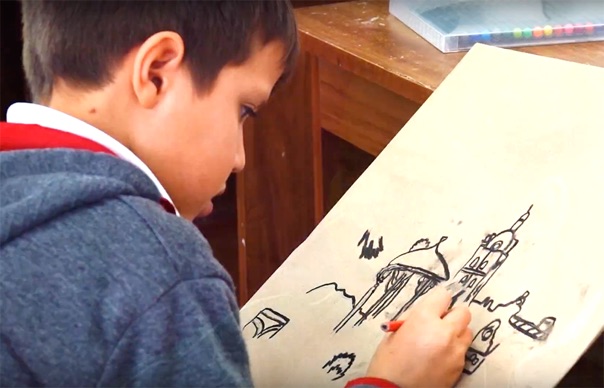
Álamos Community artists Ana Alejandra Anaya Rojo, Maria Lizeth Valenzuela Barriga, and Katherine Callingham (History Association member) helped elementary students (pictured above) at La Escuela Revolución to draw scenes of the Álamos historic center and the surrounding environment during a workshop January 25, 2020, sponsored by the Cultural Institute of Sonora. The workshop was one of the official art projects carried out during the 36th Annual Alfonso Ortiz Tirado International Music Festival, and compliments other History Association projects in place at this school.
The director of the Escuela Revolución is Alejandro Flores Parra, and History Association Board member Trini Rangel teaches at the school. Sky Chaney of Kanab, Utah, placed a short video of the project on line, which can be seen by clicking the link below and then clicking again on the drawing “Pinturas de Alegría”:
https://photos.app.goo.gl/bhjKCaTAnL1erU33A___________________________________________


TWO PICTURES ABOVE: With words in English relating to Valentine’s Day in the background, students at Revolution School sing songs in English.


ABOVE AND BELOW: History Association and foreign community members and parents sit at the back and stand at the sides as third grade students read their family histories. Students wrote about their families in English, and also included pictures or drawings of their brothers and sisters, parents, and grandparents.
Valentine’s Day Project
Under the guidance of History Association Board member Trini Rangel, students at the Revolution Elementary School (la Escuela Primaria Revolución) participate in a Valentine’s Day program which includers singing songs in English and reading their carefully prepared family histories to both their fellow students, parents, members of the Álamos History Association, and other in the foreign community. The pictures below were taken February 11, 2016.