The Fray Antonio de los Reyes
Museum of Sacred Art
Álamos, Sonora, Mexico

The Fray Antonio de los Reyes
Museum of Sacred Art
Álamos, Sonora, Mexico
The “Fray Antonio de los Reyes Museum of Sacred Art” is scheduled to open soon in a new location: the Rectory of the Parish Church of la Puísima Concepción on Calle Gutiérrez. The Rectory has an Annex of two floors in which all of the art pieces currently in possession can be displayed, and where future art pieces can be added.
The objective of the Fray Antonio de los Reyes Museum is “to increase the faith of believers, to stimulate it in those who are in doubt, and to spread, among all persons, the love of God that is manifested through art,” according to Fr. Javier Vargas Becerril, who made a presentation to the History Association November 14, 2013.
The museum contains church materials no longer in use or on display, including a number of paintings and a pump organ made in the 17th Century. When the museum opens, further information will be presented on this website.
_____________________________________________________________________________
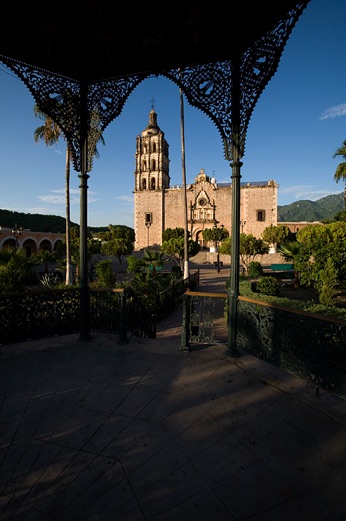
Iglesia Parroquía de Nuestra Señora de la Purísima Concepcíon
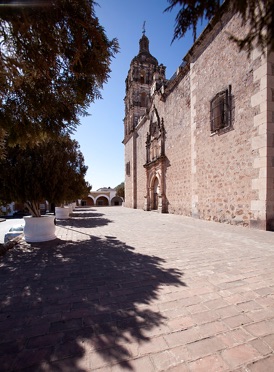
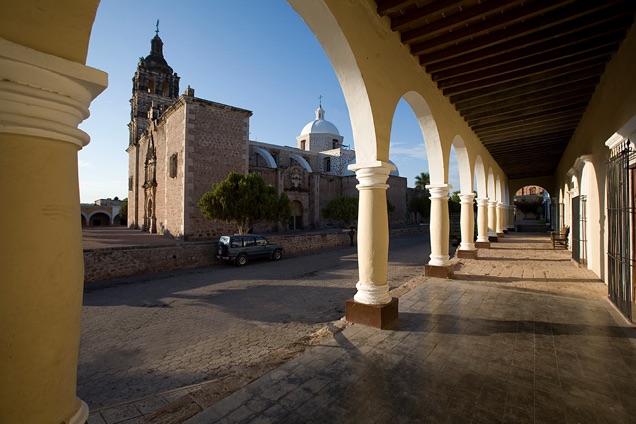
The church sacristy holds church records dating back to 1690, written in India ink on handmade paper. When Franciscan Friar Antonio de los Reyes came to New Spain in the 18th Century as Bishop of Sonora, Sinaloa and the Californias, the Álamos church was a small adobe building. The bishop ordered that it be rebuilt as a cathedral, and construction began in 1786. Built with three domes and stone walls five feet thick, its gold altar pieces were imbedded with precious stones–but these valuables were stolen or destroyed during revolutions and Indian uprising. The bells and clock on the outside wall were sent from Spain.
All Photos©Errol Zimmerman

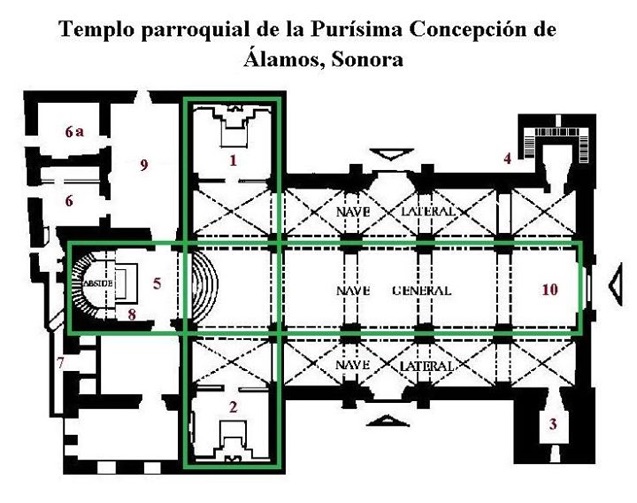
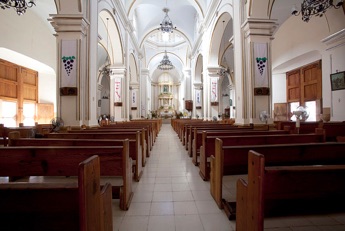
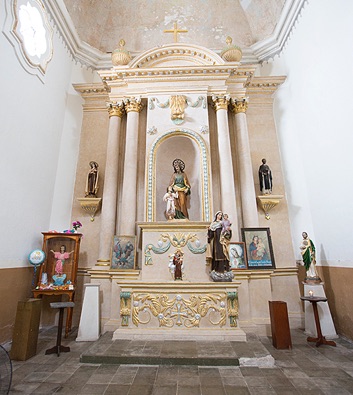
# 1 - “Capilla de San José.” A lo largo del tiempo las imágenes de vírgenes, cristos y santos, han cambiado de lugar, por lo que asegurar que a través de los siglos ésta área del templo ha sido siempre la capilla del “Señor San José” es aventurado. Sin embargo, si fuera así en ésta área debe de localizarse el cuerpo de don Bartolomé Salido y Exodar, el cual murió y fue sepultado en el año de 1817 “en la capilla de San José de este templo parroquial.”
________________________________
#1 - Through time the religious images have changed, and it’s risky to say that this has always been what it is now—the Chapel of San José. If it has been, under this area one will find the remains of Bartolomé Salido y Exodar, who was buried in 1817 in “the chapel of San José in this temple.”
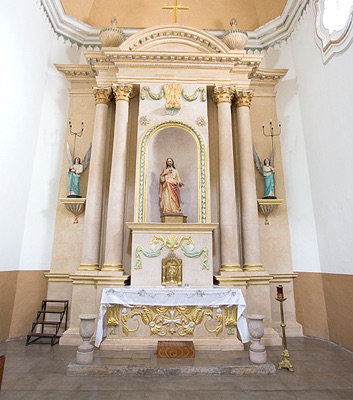
#2 - el Sagrario o Santísimo. Sabemos que esto es desde mediados del siglo pasado, ya que fue a partir del Concilio Vaticano II que el Sagrario pudo moverse del Altar Mayor. Anteriormente el Santísimo se encontraba en el Altar Principal, por lo que el sacerdote celebraba misa dando la espalda a la gente, mirando de frente al Santísimo. ¿Cómo saber dónde se localiza el Sagrario en un templo? Donde veamos la luz roja.
________________________________
#2 - After the Vatican II Council in the 1960s, it was acceptable to move the Sagrario from the main Altar. Before, the Santísimo was found in the principal Altar as the priest celebrated the Mass with his back to the congregation and looking into the face of Christ. How do we know where to find the Sagrario in a temple? It is where we see the red light.
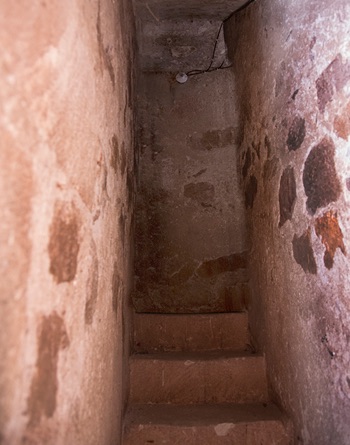
#4 - la puerta de acceso a las escaleras que conducen a la azotea y campanario del templo.
______________________________
#4 - This is the stairway that leads to the roof and the bell tower of the church.
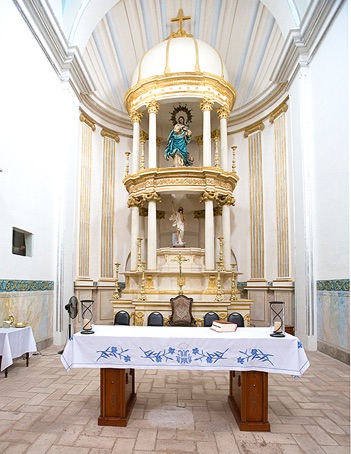
#5 señala el área del altar, donde se supone que está sepultado Antonio de los Reyes, primer obispo de Sonora, Sinaloa y Californias, fallecido en marzo de 1787. En el ábside se levanta el ciprés en cuyo primer nivel podemos ver el manifestador y un crucifijo; luego, en el segundo nivel se encuentra la escultura del siglo XIX de la Inmaculada o Purísima (es decir libre de toda mácula o mancha) Concepción de María.
______________________________
#5 marks the altar, under which it is presumed is buried Antonio de los Reyes, the first bishop of Sonora, Sinaloa, and California, who died in March of 1787. In the first level we can see Christ and the crucifix, and on the second level is found a 19th Century Sculpture of the immaculate and pure image of the Holy Mother.
#6 - #9 - #6a he señalado los cuartos anexos a la oficina o despacho parroquial (9), que anteriormente servían como casa habitación de los sacerdotes, esto todavía en la década de 1930.
Incluso en el 6ª, por dentro, ahora que malamente arrancaron el enjarre se puede ver con claridad una gran puerta tapiada, que seguramente era la cochera del templo, misma que funcionó en la primera mitad del siglo XIX.
_____________________________
#6 - #9 - #6a are currently church and ministerial offices, but until the 1930s this area served as a home for the priests. In one of the rooms a large walled-in door is clearly visible, which was once the “cochera” used in the early 19th Century as an entrance for horse-drawn coaches.
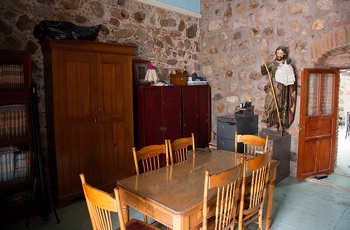
#7 marca el área donde algunos me han dicho se localiza un pequeño cuarto secreto, justo detrás del clóset o armario que guarda las vestimentas litúrgicas.
___________________________
#7 is the room where the priests’ liturgical dress is stored in wooden closet. Some have said that in this room there is a secret area which was used to hide liturgical dress during the “guerra cristera” in Mexico during the 1920s.
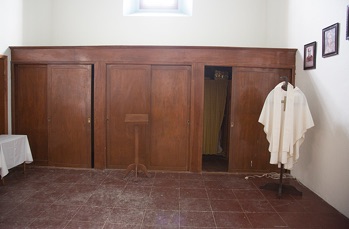
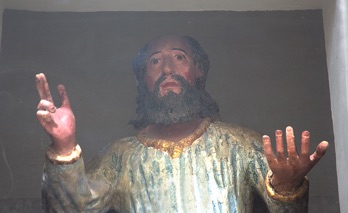
#8 señala el punto donde fue localizado “emparedado” una escultura de madera que se presume es San Pedro. El nicho donde se encuentra es muy grande, con forma y tamaño de sacófago. El que esto escribe tuvo en sus manos la carta que estaba junto al Santo el día que lo descubrieron (en el año 2005 aproximadamente) la cual decía “Alamos feb [ilegible por termitas] de 1832” el resto de la carta era ilegible por el mal estado. Actualmente está perdida.
__________________________
#8 marks the spot where the wooden sculpture, presumably of St. Peter, was found. A letter was found with the statue which read in part “Alamos feb de 1832,” but the rest of the letter was illegible due to deterioration. Currently, this letter has been lost.
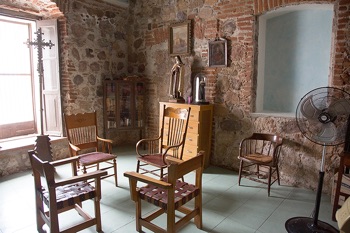
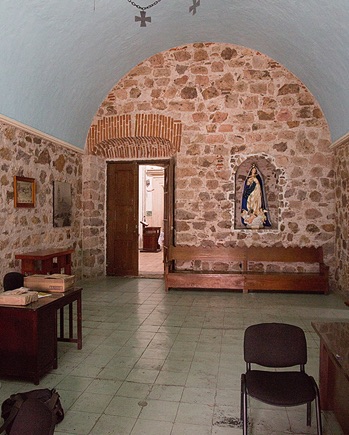
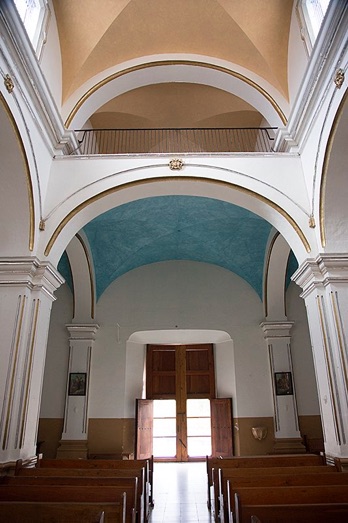
#10 señala el área, justo entrando por la puerta principal, pero arriba, en un entre techo entre el piso y las bóvedas altas, cuya función era dar cabida al coro, el cual subía a dicha área por las escaleras antes señaladas. Tiene su propia ventana para la ventilación, misma que da al exterior y se integra a la fachada principal, llamándosele “ventana del coro”. El piso de esa área es el único original en todo el templo, es de ladrillo puestos en forma de “petate” o “petatillo”, es también a ésta área donde bajan las pesas suspendidas de cadenas que dan cuerda al reloj ornamental de 1862. Viendo al coro de frente, al lado derecho hay una puerta que da a un cuarto bajo la torre, que seguramente era utilizado para guardar los instrumentos musicales.
__________________________
#3 (no hay foto) es el Bautisterio donde antaño estaba la pila bautismal original que hoy se encuentra en el patio de una casa funcionando como maceta y de la cual el INAH nunca ha querido tomar cartas en el asunto. En el marco de cantera de la puerta de ese cuarto podemos ver labrado el monograma de San Juan Bautista. Actualmente funciona como confesionario.
_____________________________________________________________________________
#3 (no photo) is the original Baptistry, but the baptismal bowl is now located at a house in Álamos and serves as a flower pot. The National Institute of Anthropology and History (INAH) has never investigated this or made any attempt to return the baptismal to the church. Under the door is the monogram of St. John the Baptist, and this room, once used as a confessional, is now a storage area for the church.
_____________________________________________________________________________
#10 shows the area, just above the main entrance which served as the choir loft, which was accessible by stairs located off to the left. For ventilation, the choir has window which is visible from the outside, and the floor of the choir loft is the only original floor (made of bricks) found in the church building today. Also in the choir loft are weights suspended from strings which wind the artifical clock, put in place in 1862. To the right under the tower is a room which was probably used in early days to store musical instruments.
#1
#2
#5
#6
#9
#6a
#7
#8
#10
GO TO:
Anza Society Conference
https://alamoshistoryassociation.org/50.63.41.1/Anza_Society_Conference.html
#4